
Baked Salmon Fillet from Frozen
From freezer to oven, your next seafood dinner will be ready in no time. Don’t worry if you didn’t have time to defrost. Perfectly flaky, tender, moist, and savory, my baked salmon fillet has to be your next easy and delicious weeknight meal!
Be Sure To Try My Easy Hibachi Dinner Recipe Next!
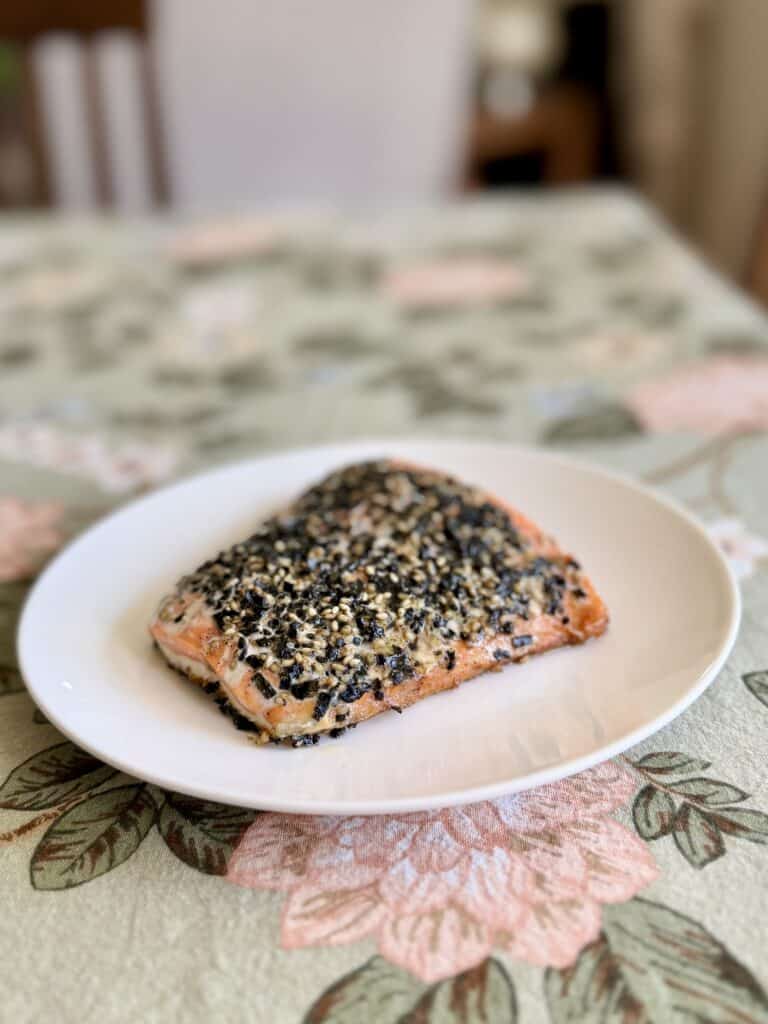
How To Cook Frozen Salmon
When it comes to food, it’s essential to consider not just what you consume, but also how you prepare it. Cooking methods matter. For example, grilling meat at high temperatures is a carcinogenic risk, but marinating meat reduces the risk. Baking in silicone pans poses higher risks to your health than baking in glass pans.
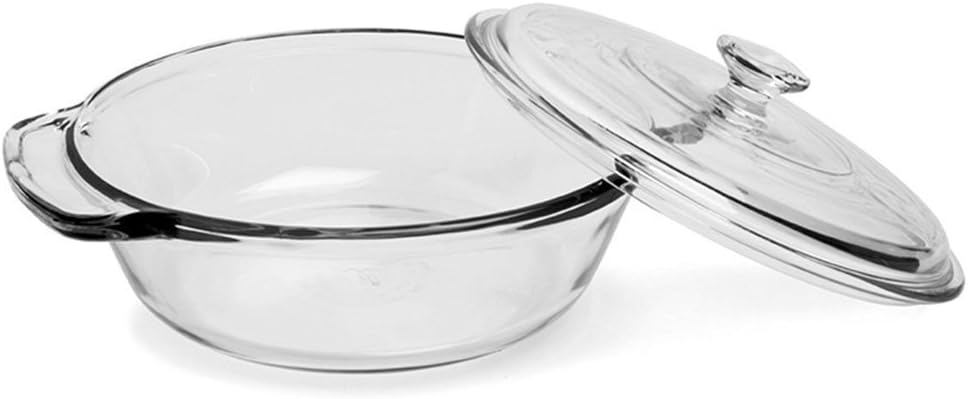
Cooking salmon without the use of aluminum foil is ideal; however, if it’s what you have, it will get the job done. I recommend cooking frozen salmon in a glass casserole dish with a lid. This Anchor Hocking 2-Quart glass casserole dish and lid make it so easy to cook foods without toxins. I have had mine for almost seven years now, and I absolutely love baking with it!
Purchase the Anchor Glass Casserole Dish HERE!

Introducing my new Book
Real Food Lunchbox
40 simple, nourishing, and budget-friendly recipes that are kid-approved!
Make packing school lunches simple, affordable, and nourishing with 40 real food lunchbox recipes your kids will actually eat. This eBook was created to help busy moms say goodbye to ultra-processed packaged lunches and hello to a wholesome rhythm of feeding their family real food, even during the busiest school mornings.
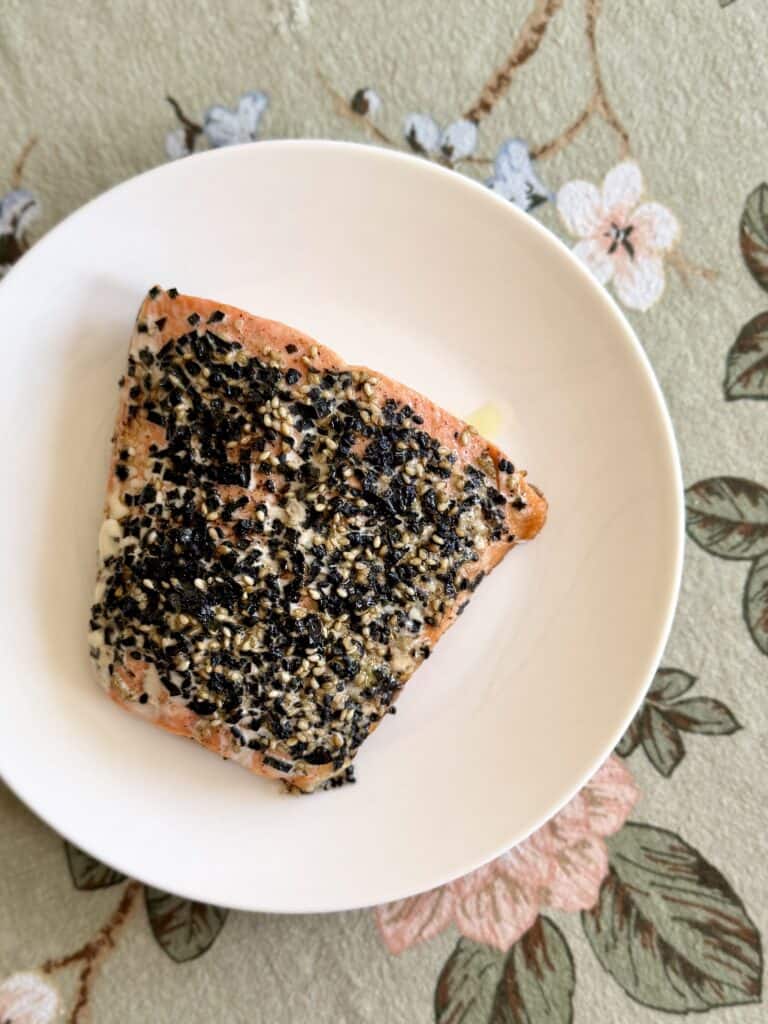
Benefits of Baked Salmon
Salmon offers a powerhouse of nutrients. It’s a great source of lean protein, Omega-3 fatty acids, selenium (a mineral that supports the thyroid and bones), as well as other vitamins, minerals, and antioxidants. It’s essential to note that not all salmon is created equal.
Wild-caught salmon is the best, as farm-raised salmon tend to come with extra hormones and additives, while also being stripped of essential nutrients the fish would obtain in the wild. Eating wild-caught salmon regularly improves brain health and cognition, and also contributes to an overall healthy diet. It’s also incredibly easy and quick to cook, as you’ll see!
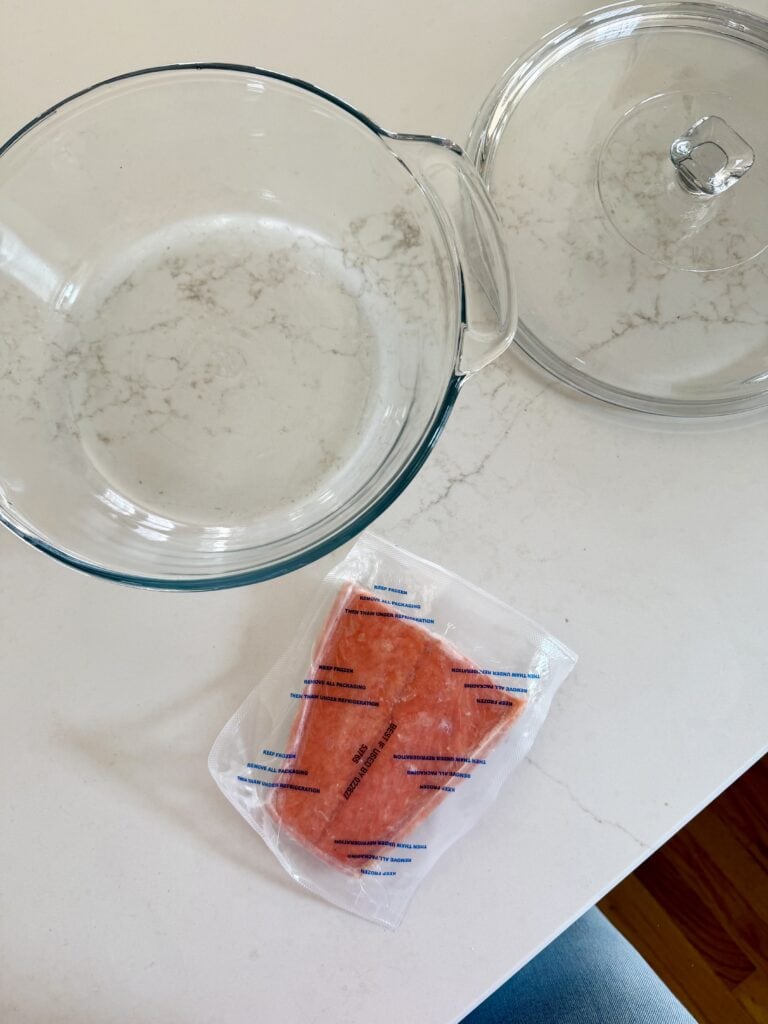
Frozen Salmon in Oven Recipe
No need to thaw; grab your salmon fillets straight from the freezer and preheat your oven to 425 degrees.
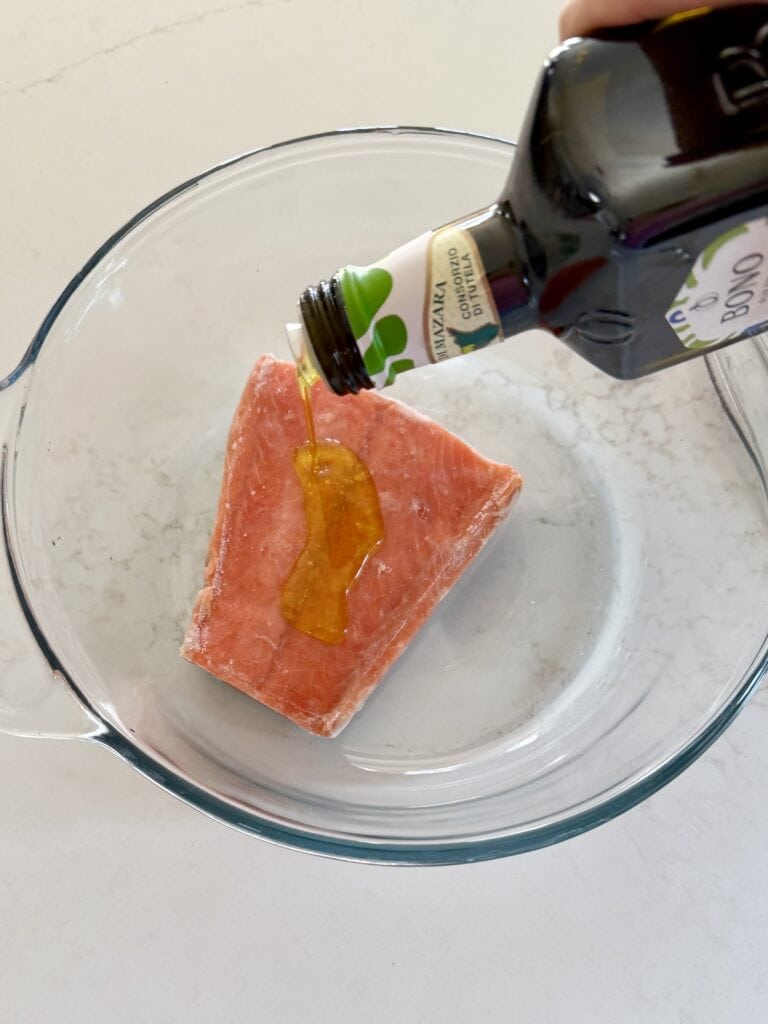
Step 1: Add a tablespoon of olive oil to cover and moisten your fillet.
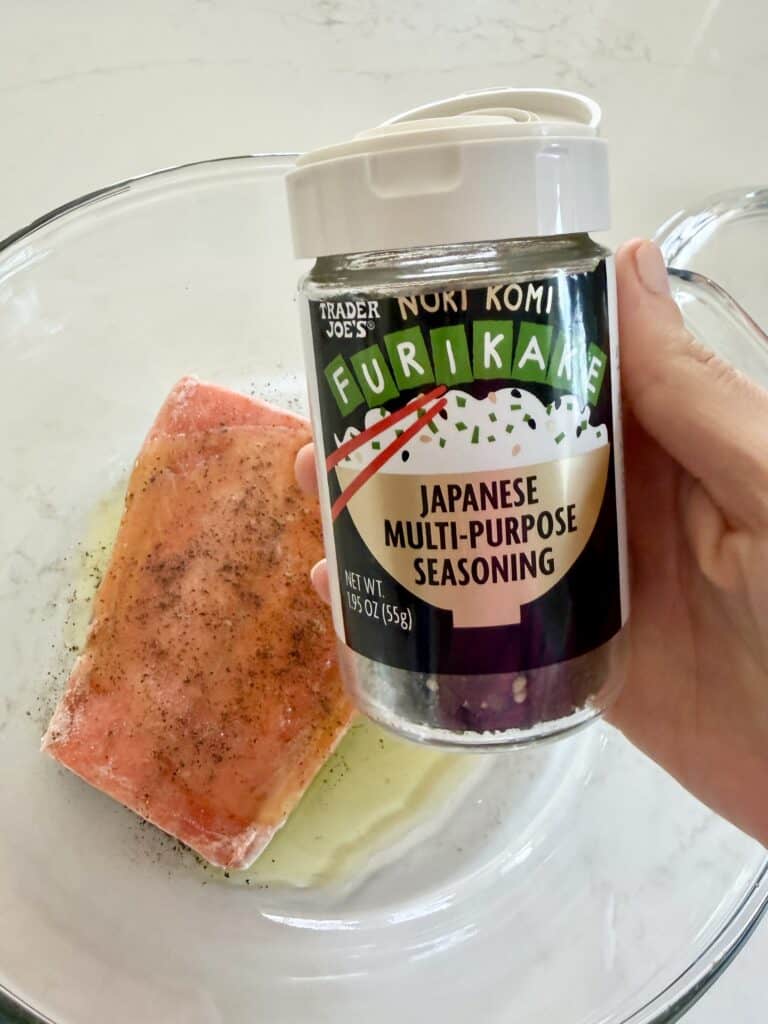
Step 2: Sprinkle salt and pepper over the fillet, and add additional seasonings. I generously rub dried dill or Japanese Furikake (see below) to cover the entire fillet.
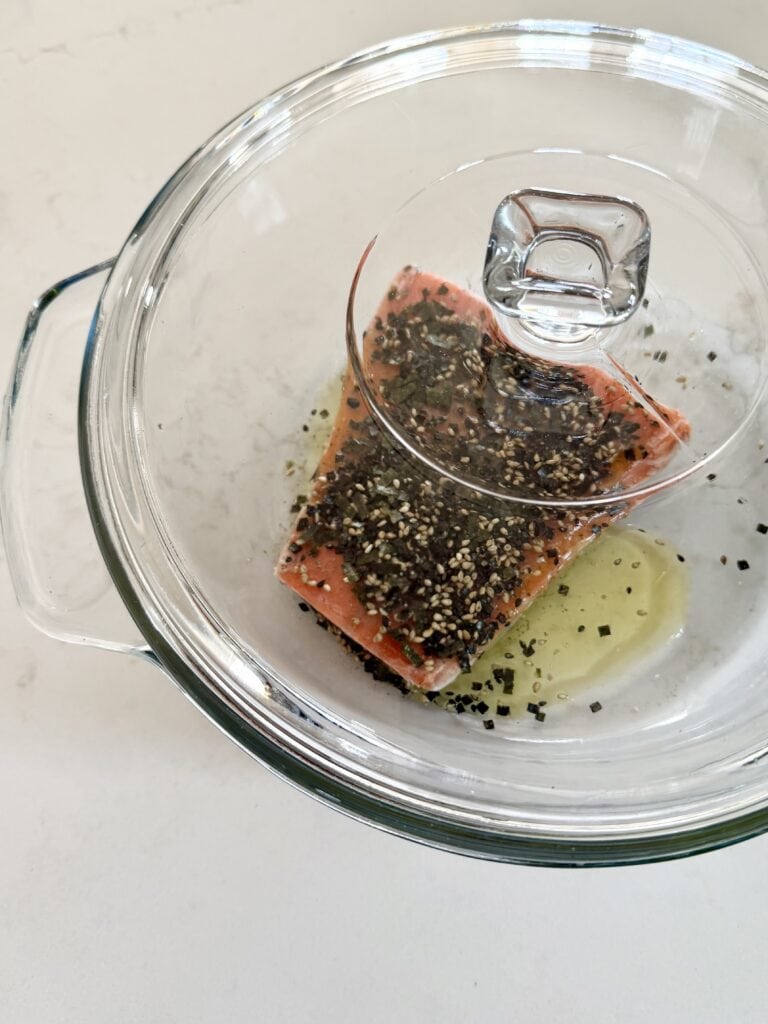
Step 3: Cover the glass dish (or fold over foil, if using foil, to lock in moisture) and bake for 25 minutes. Then, take the lid off the glass dish and bake uncovered for an additional 8-12 minutes. The safe internal temperature for salmon and fish is 145°F.
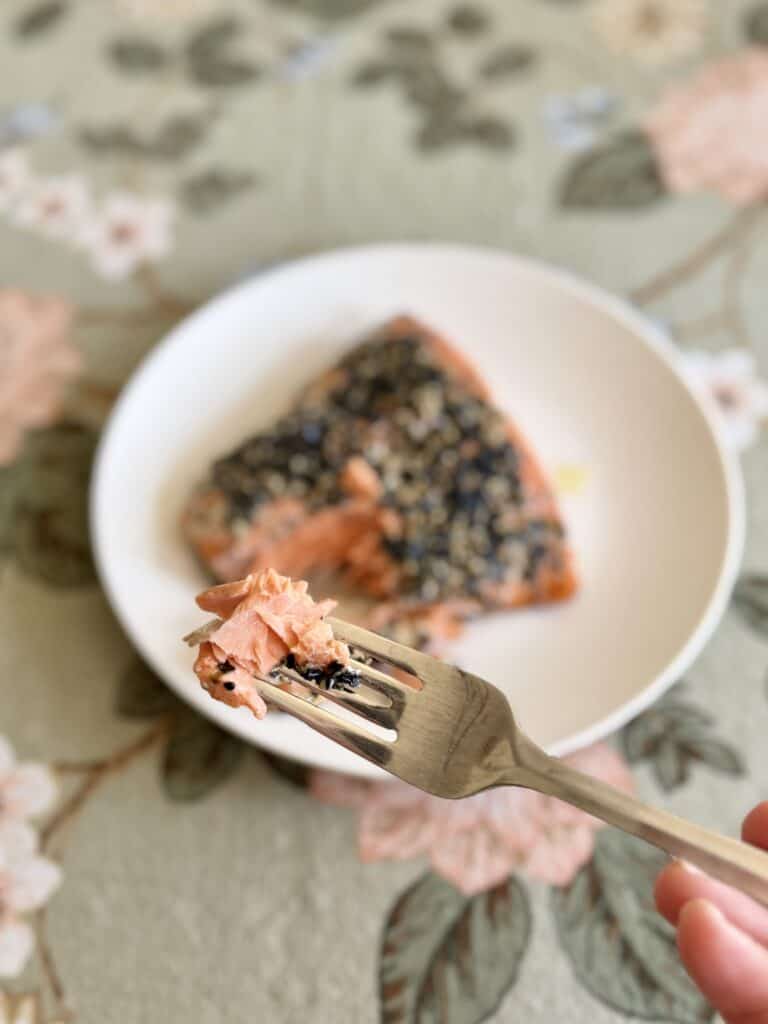
Once the salmon is cooked, it’s ready to enjoy. Skin will easily peel off after cooking. Serve with vegetables and rice, or atop a salad for a satisfyingly nutritious meal!
Alternative Frozen Salmon Recipes
Salmon doesn’t have to be boring! You can dress it up to complement your meal with tons of different flavors. Choose seasonings, marinades, or sauces that you enjoy. Here are some of my favorite “salmon-themed” dinner ideas:
- Baked Parmesan Salmon for Caesar Salad
- Herbed Salmon & Roasted Root Vegetables
- Everything Seasoned Salmon with Roasted Broccoli and Sweet Potatoes
- Pesto Salmon & Gnocchi
- Spicy Salmon Poke Bowls
- Sticky Teriyaki Salmon & Fried Rice
- Salsa Salmon over Rice (check out my recipe for a Thai-inspired salsa over salmon below)
Experiment and Enjoy!
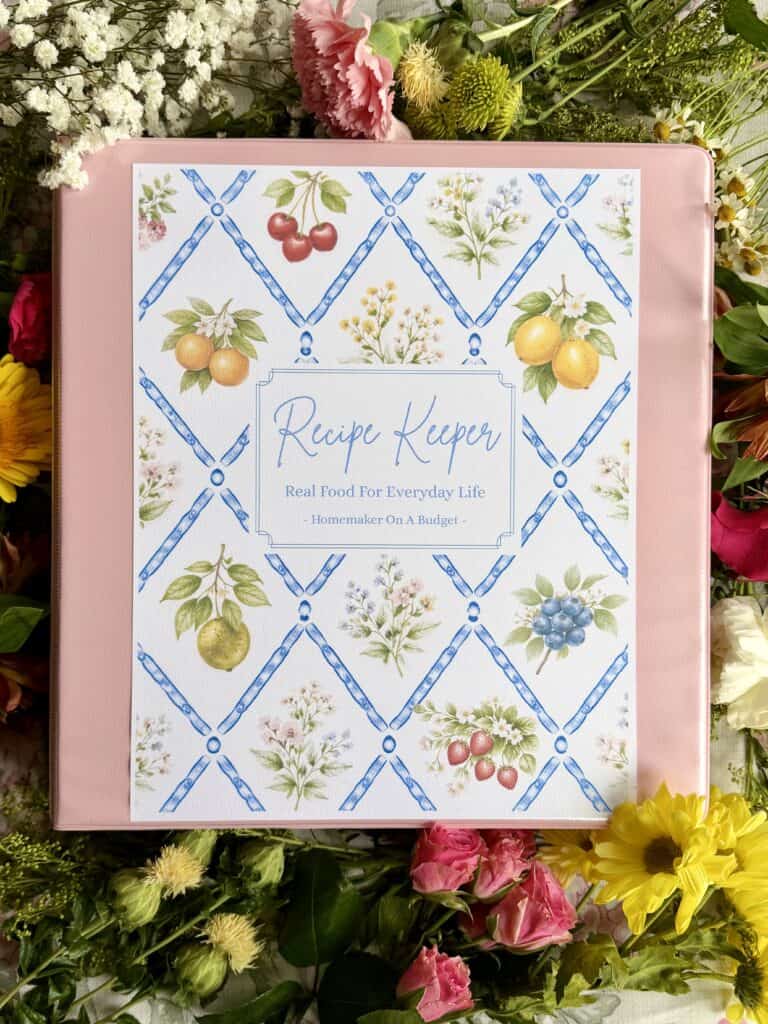
Create your very own
Recipe Keeper
real food for everyday life
Take your favorite family recipes and make a treasured keepsake that can be passed down through the family. Nobody will look at your Pinterest boards someday, but they will love pouring themselves over your Recipe Keeper as they reminisce about the meals you created.
other recipes you might enjoy:
- Chicken with Orange Juice Marinade
- Low-Carb Enchilada Bake
- Thai Salsa over Salmon
- Baked Grass-Fed Beef Chuck Roast

Baked Salmon Fillet From Frozen
Ingredients
- 1 frozen salmon fillet wild caught
- 1 Tbsp extra-virgin olive oil
- sprinkle of seasonings salt and pepper, dried dill, or Japanese Furikake
Instructions
- Preheat the oven to 425 degrees.
- In a glass dish, add the frozen salmon fillet, straight from the freezer.
- Drizzle the top with extra-virgin olive oil.
- Sprinkle the top with salt and pepper. Then, sprinkle with either dried dill or Furikake. I generously sprinkle the top of the salmon with seasonings to completely cover it.
- Cover the glass dish with a glass lid or aluminum foil. Bake for 25 minutes, then remove the cover and bake for an additional 8-12 minutes. The time depends on the size of the fillet. Generally, it takes 10 minutes. You can also check the internal temperature, and once it reaches 125 degrees, it's done.
- ***These salmon fillets come with the skin on. After cooking, the skin will easily peel right off the fillet.
Post Disclaimer
This page contains affiliate links. When you purchase through them, you help support Homemaker on a Budget. Thank you for being part of this community!
I just made the baked salmon fillet and it was delicious. I used your “all purpose seasoning” on them and it turned out amazing. Love that they start out frozen. Thank you, Aimee!
I made this yesterday and itwas so easy! Tasted great! I used dill since that’s what I had on hand. So glad for this recipe that I can use when I decide to have salmon again!